
Watching your baby take their first steps is one of the most important milestones of early development. One moment, they are crawling confidently, and the next, they are standing, wobbling, and moving toward independence. Naturally, many parents ask the same question at this stage: Does my baby need first walking shoes yet, and if so, what kind?
The answer is more nuanced than simply yes or no.
Let us break it down.
Is Barefoot Best?
For babies who are not yet walking independently, going barefoot is ideal, especially indoors.
This is because bare feet allow babies to:
- Feel the ground and develop balance
- Strengthen foot muscles naturally
- Improve coordination and sensory feedback
For this reason, pediatricians often recommend allowing babies to crawl, stand, and cruise barefoot or in socks with grip when they are safely indoors.
However, once a child begins taking independent steps, particularly outdoors or on rough surfaces, proper footwear becomes essential. At that stage, first walking shoes are not meant to teach walking, but rather to protect developing feet without interfering with natural movement.
The Role of First Walking Shoes in Early Walking
A baby’s foot is not simply a smaller version of an adult’s foot. In fact:
- Babies’ feet are mostly cartilage
- Bones are still forming and will not fully ossify for years
- Incorrect footwear can interfere with healthy development
Therefore, first walking shoes should support development rather than restrict it.
What Should First Walking Shoes Include?
Pediatricians and experts agree on several key principles when selecting first walking shoes.
1. Flexible Soles
First, walking shoes should allow the foot to bend naturally. A flexible sole supports balance and muscle development while preserving natural movement.
A simple test parents can use is this: if you can easily bend the front sole with your hand, it is a good sign.
2. Firm but Gentle Heel Support
While the front of the shoe should remain flexible, the heel requires gentle structure to help maintain alignment during early, unsteady steps.
This helps:
- Improve stability
- Prevent excessive foot rolling
- Encourage proper posture
3. Wide Toe Box
Toes need room to spread as the child pushes off the ground. Shoes that are too narrow may compress the toes and interfere with balance and growth.
A healthy first walking shoe allows natural toe movement.
4. Lightweight Materials
Heavy shoes can make walking more difficult for small legs that are learning a new skill. Lightweight designs reduce fatigue and allow more natural movement.
5. Breathable and Safe Materials
Babies have sensitive skin. Therefore, high-quality breathable materials help prevent irritation and maintain comfort throughout the day.
When Should You Buy Your First Pair of Walking Shoes?
A practical guideline is as follows:
- Cruising only? No shoes are needed indoors.
- Taking several independent steps? It may be time to consider first walking shoes.
- Walking outdoors regularly? Proper footwear becomes essential.
In addition, it is important to check sizing frequently. Babies’ feet grow quickly, sometimes every two to three months.
Designed with Pediatric Insight
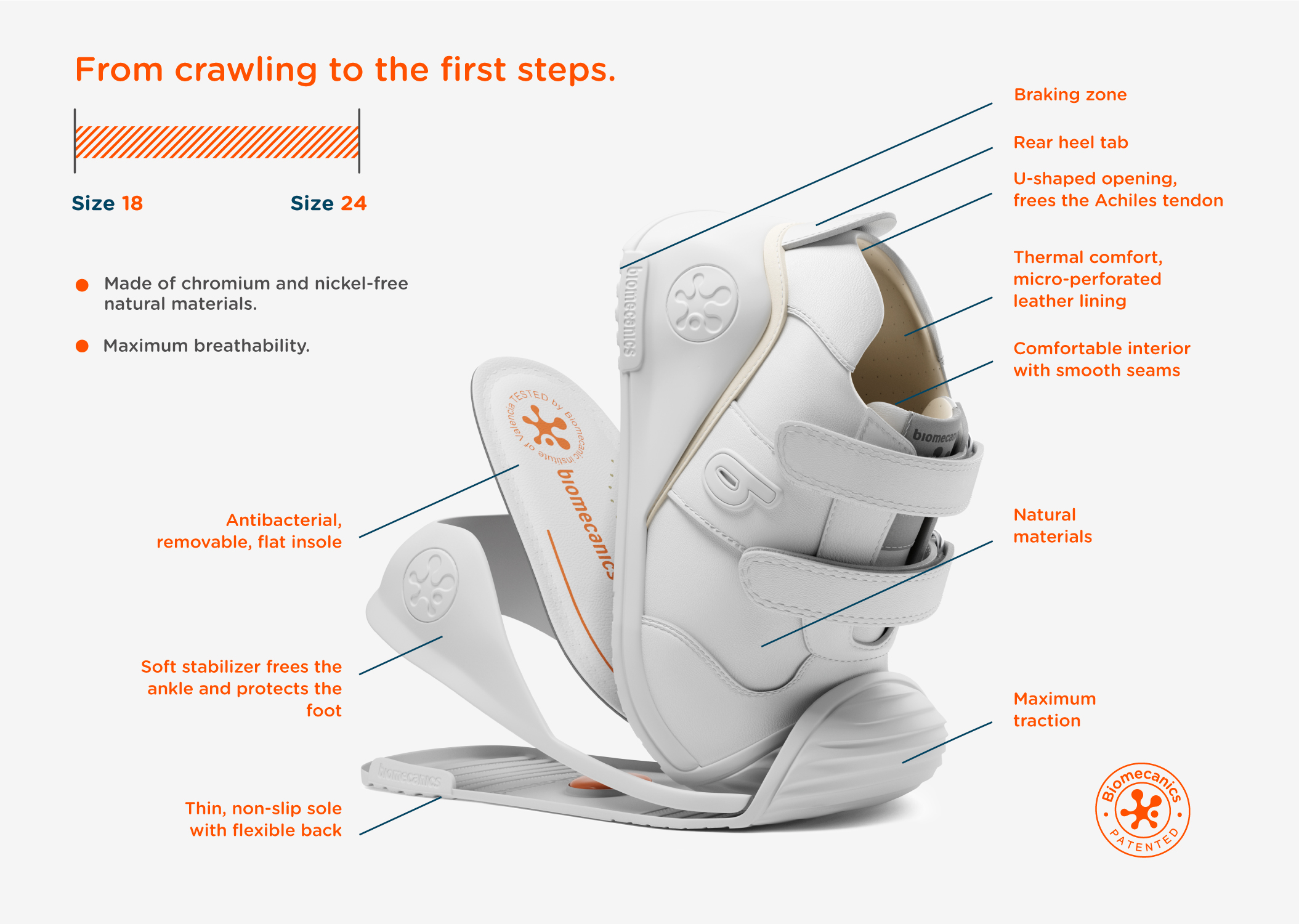
Kiddio offers a curated collection of Biomecanics first walking shoes developed in collaboration with pediatricians and biomechanical specialists who understand how children’s feet grow and move.
Each design is created to:
- Respect natural foot development
- Offer protection without restriction
- Support healthy walking habits from the very first step
When it comes to first walking shoes, early choices matter.
Have advice for moms or a personal story to tell? We’d love to feature your voice on our blog! Share your experiences with us here! We’re always excited to welcome new perspectives and stories from moms like you!